The Role of PLM in Industry 4.0
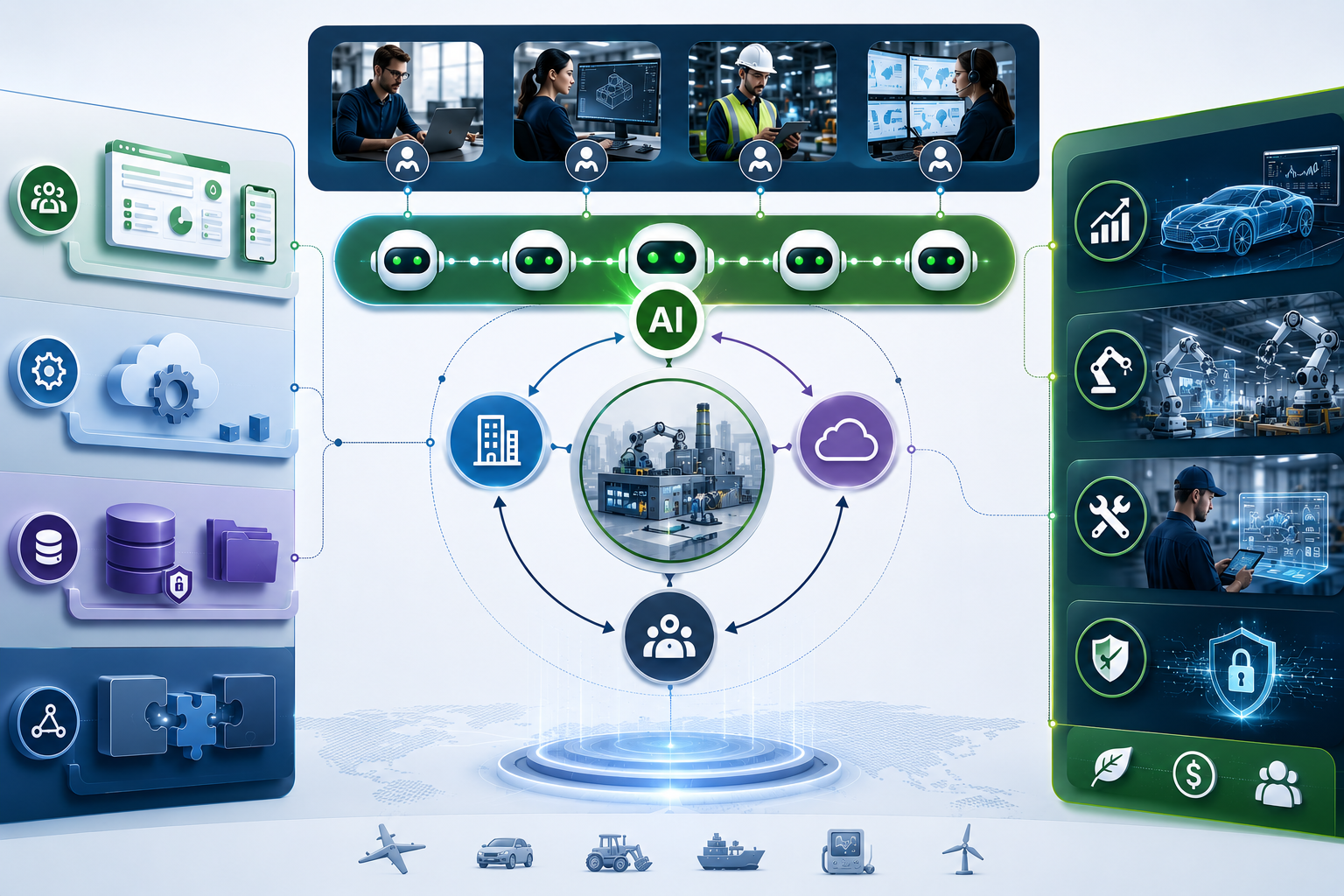
From being an essential tool to organize drawings and documents to being the strategic foundation for corporate IT, Product Lifecycle Management (PLM) has evolved significantly. PLM has always concentrated on managing versions and CAD file storage. Nevertheless, it has developed into a company-wide digital thread that combines supply chain, engineering, manufacturing, and service management in the age of Industry 4.0.
Significant Roles of PLM in the Contemporary Industrial Context
1. Addressing Complexity
PLM makes it possible for teams who are spaced out across various nations to collaborate easily, assuring design consistency, legal compliance, and a quicker time to market.
2. Continuity of Digital
Digital twins may predict maintenance requirements, enhance performance, and even model potential future events by evaluating real-time data.
3. Facilitating Predictive Manufacturing
PLM facilitates real-time operational changes and predictive maintenance by combining IoT, sensor data, and AI.
4. Appealing to Automation
PLM uses robotic process automation (RPA) and artificial intelligence (AI) to automate logistics in the supply chain, requirements tracking, and change management.
In order to create an end-to-end digital thread and assure that the engineering, production, and service teams collaborate, a well-structured PLM system is required. This integration increases client satisfaction, boosts manufacturing efficiency, and decreases design iterations.
The Power of Digital Twins
By building virtual versions of real systems, processes, and products, the idea of digital twins is revolutionizing traditional production. Real-time information from digital twins help manufacturers anticipate problems, streamline processes, and enhance product performance.
Three Digital Twin Maturity Levels
1. Twin Digital Controller
focuses on simulation and design, allowing engineers to verify virtual prototypes and forecast real-world behavior prior to production.
2. A scenario of a digital twin
enhances performance monitoring and makes predictive maintenance possible by connecting real-time operational data from IoT sensors to the virtual model.
3. Compilation of Digital Twins
a system of interconnected twins that industrial facilities utilize to optimize processes on a massive scale.
Benefits of Digital Twins in Industry 4.0
1. Cutting Down on Time to Market
Businesses can shorten the time it takes to develop new products by up to 50% by validating ideas using real-time simulations before physical prototyping.
2. Improving Efficiency in Operations
AI-powered automation and predictive analytics increase shop floor productivity by 40%.
3. Cutting Down on Downtime
Digital twins reduce machine downtime by 20–30% by anticipating malfunctions and maintenance requirements.
4. Enhancing the Quality of the Product
Real-time monitoring ensures defects are identified early, preventing costly recalls.
How AI Enhances Digital Twin Capabilities
By facilitating automated decision-making, pattern identification, and real-time anomaly detection, artificial intelligence is enhancing digital twins.
AI-Driven Digital Twin Architecture
- Phase 0: Data Collection & Structuring: arranging CAD models, historical records, and data from IoT sensors for analysis powered by AI.
- Phase 1: AI-Assisted Decision Support: Under human supervision, AI makes suggestions for process improvement and predictive maintenance.
- Phase 2: Autonomous AI Operations: AI-powered systems carry out predictive scheduling, streamline manufacturing procedures, and automate operations with little assistance from humans.
AI-Powered Functionalities in Digital Twins
- Predictive analytics using machine learning: AI continually examines sensor data to anticipate equipment faults before they happen.
- Neural Networks for Process Optimization: AI-powered models modify production processes to reduce waste and boost productivity.
- Reinforcement Learning for Smart Automation: Digital twins automatically improve production schedules, logistics, and energy usage by learning from real-world operations.