The era of Artificial Intelligence (AI) is placing Chief Technology Officers (CTOs) in a strategic dilemma. On one hand, the pressure to rapidly deploy AI/ML models to maintain a competitive edge is immense. On the other hand, infrastructure budgets are under severe threat from a "perfect storm": prices for semiconductor components (DRAM, NAND Flash) continue to escalate due to global supply shortages, while the volume of data required to train AI is exploding exponentially.
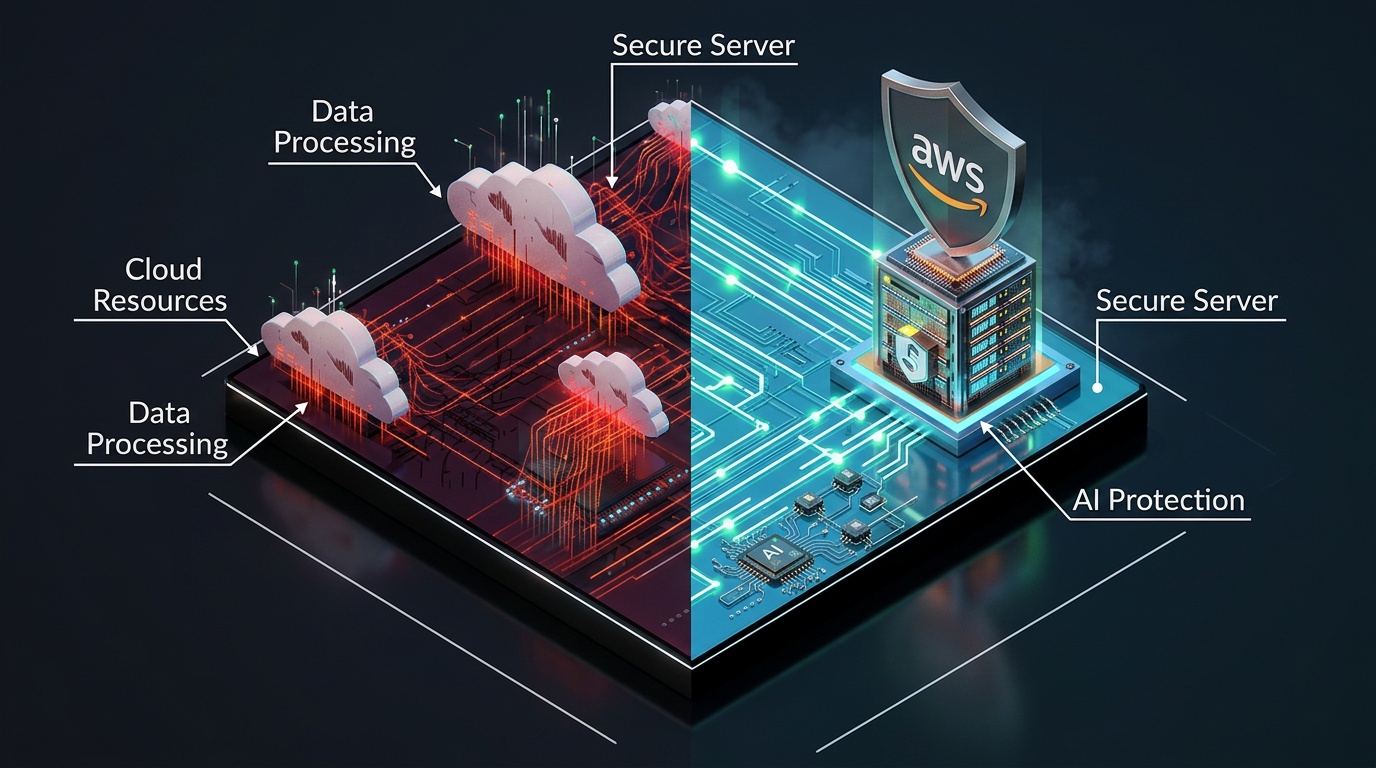
To safeguard themselves against vendor lock-in and enhance redundancy, many enterprises have adopted a multi-cloud strategy. However, this approach inadvertently creates another intricate puzzle: system fragmentation, a loss of control over hidden costs (such as data egress fees), and cybersecurity risks from scattered data. In the face of these challenges, Amazon Web Services (AWS) delivers an intelligent storage ecosystem and centralized governance, enabling enterprises to restructure their infrastructure, optimize costs, and unleash the full potential of AI.
The biggest pain point for enterprises today is the staggering cost of storing massive volumes of data for model training. Racing to procure physical hardware or indiscriminately using raw cloud storage will rapidly deplete budgets.
AWS completely resolves this challenge through Amazon S3 (Simple Storage Service) combined with automated data lifecycle management.
By implementing Amazon S3 Intelligent-Tiering, an enterprise's system automatically monitors and transitions less active (infrequently accessed) datasets to lower-cost storage tiers without compromising performance when data retrieval is required.
For legacy data or regulatory compliance records, Amazon S3 Glacier Deep Archive provides a long-term archiving solution at an all-time low cost, enabling enterprises to optimize every line item on their balance sheet.
Governing and securing AI metadata including model configurations, features, and data pipelines across a multi-cloud environment is an operational nightmare. A lack of synchronization among different cloud providers easily leads to severe configuration vulnerabilities.
To establish a centralized control layer, AWS offers the Amazon SageMaker platform, featuring specialized capabilities such as SageMaker Model Registry and SageMaker Feature Store. This solution enables enterprises to build a "single pane of glass" to control the entire AI model lifecycle—from data preparation via AWS Glue to production deployment regardless of where the raw data resides.
An undeniable challenge for global enterprises, particularly in the financial and healthcare sectors, is compliance with strict data sovereignty (Sovereign Cloud) regulations. Many countries mandate that sensitive AI data must not leave their national borders.
To break down this barrier within a multi-cloud model, AWS Outposts allows enterprises to run native AWS infrastructure and services directly inside their own on-premises data centers or designated local facilities.
Combined with Amazon EKS Anywhere (Elastic Kubernetes Service), enterprises can standardize containerized application packaging and operations uniformly. This setup enables them to flexibly shift workloads among the AWS cloud, on-premises infrastructure, and other cloud platforms without disrupting their core architecture.
A robust AI infrastructure requires an absolute security shield against the threat of ransomware. Since data is the lifeblood of AI, it has become a lucrative target for ransomware attacks.
The Amazon S3 Object Lock feature establishes an immutable storage mechanism (WORM - Write Once, Read Many), ensuring that critical data backups cannot be deleted or modified by anyone including accounts with the highest administrative privileges for a predetermined retention period.
Concurrently, the AWS Lake Formation governance layer, in coordination with AWS IAM, enables granular access control down to the row and column levels of the data lake, while Amazon GuardDuty continuously scans and detects anomalous behavior using machine learning.
The hardware cost storm and multi-cloud complexity of the AI era are not a dead end, but rather an opportunity for enterprises to reshape their technology architecture. By shifting the focus from "hardware management" to "intelligent governance" with AWS's comprehensive storage, security, and AI ecosystem, enterprises can confidently master technology, optimize financial operations (FinOps), and achieve a powerful breakthrough in the fiercely competitive AI race.