As the industrial sector enters a phase of profound transformation, Generative AI is emerging as a strategic technological capability, enabling manufacturing enterprises to fundamentally reshape their operating models. From optimizing product design and enhancing factory performance to building agile and adaptive supply chains, Generative AI plays a pivotal role in strengthening competitiveness and driving sustainable innovation.
According to Amazon Web Services (AWS), implementing Generative AI is not merely about adopting a new technology,it requires a systematic approach built on a robust architectural foundation. This includes ensuring data security, optimizing processing performance, maintaining operational stability, and effectively controlling costs, a critical factors for delivering real value in large-scale and complex manufacturing environments.
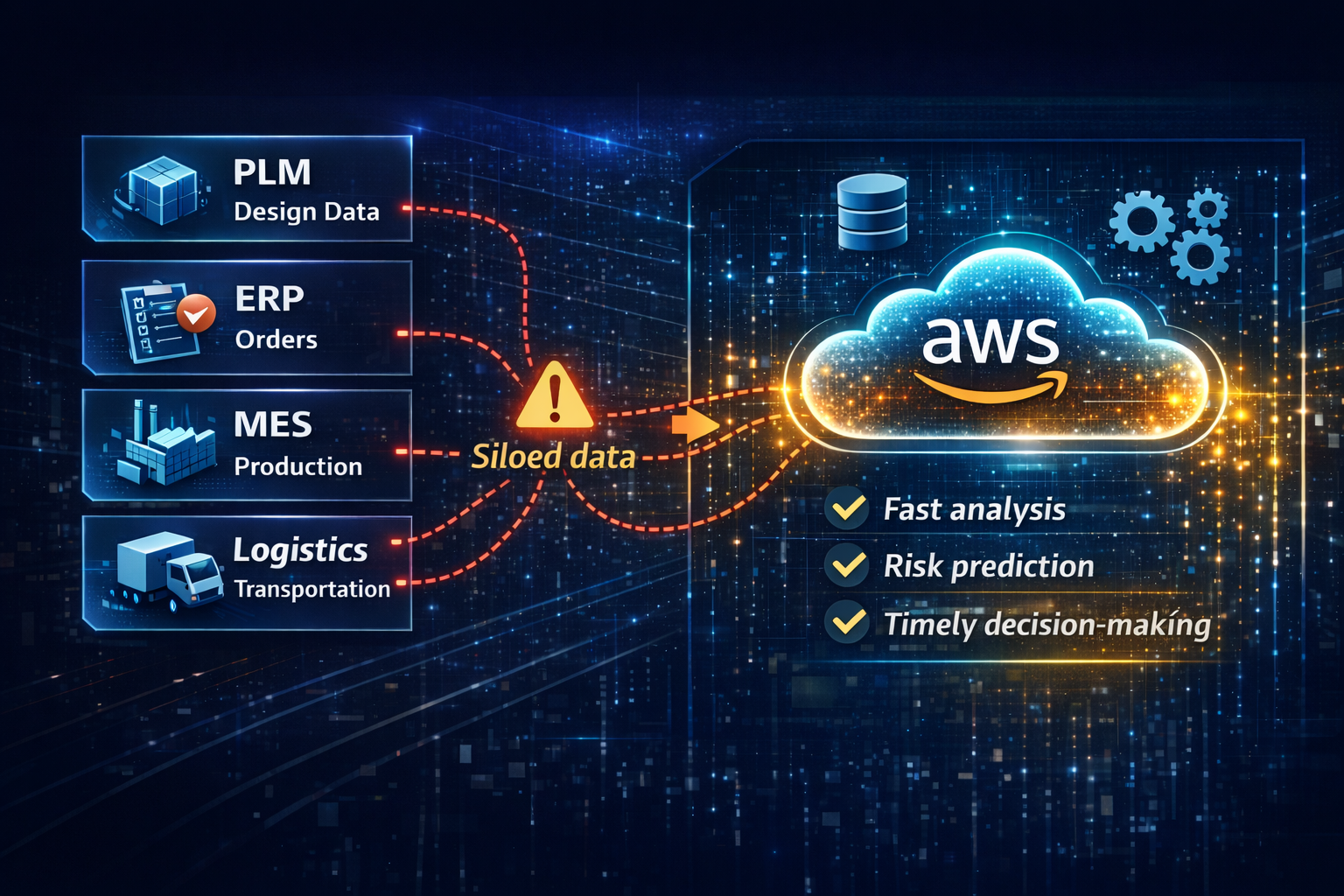
In the operational phase, the combination of the Digital Thread and Digital Twin models enables enterprises to manage products based on their specific real-world configurations. Data from product lifecycle management systems (initial design), manufacturing data (as-built configurations), and operational data (in-use conditions) are stored and synchronized on the Amazon Web Services platform.
Building on this unified data foundation, Generative AI can support technicians in diagnosing and resolving issues more quickly and accurately. Through platforms such as Amazon Bedrock, technicians can ask questions in natural language and receive repair guidance tailored to the actual history and configuration of each individual asset.
This approach helps reduce repair time, improve diagnostic accuracy, and progressively standardize maintenance processes. At the same time, it enables enterprises to transition from reactive maintenance to a more proactive model driven by data and intelligent analytics.
In modern systems such as smart vehicles, products are no longer purely mechanical, they are tightly integrated combinations of mechanical, electrical/electronic, and software components. As a result, the convergence of Product Lifecycle Management (PLM) and Application Lifecycle Management (ALM) has become essential.
On the Amazon Web Services platform, enterprises can integrate and synchronize data across multiple domains, including software data. Generative AI plays a key role in analyzing interactions among components such as firmware, control systems, and mechanical structures, enabling early detection of potential risks or design inconsistencies.
For example, a change in control software may lead to unexpected behavior in mechanical systems. When all data is connected through the Digital Thread and processed on AWS, AI can simulate and predict these impacts early in the development phase.
This approach lays the foundation for developing software-defined products, where software becomes the central element in controlling and optimizing the performance of the entire system.
A typical architecture includes:
In this architecture, Amazon Web Services is not merely infrastructure, it acts as the orchestration platform for the entire Digital Thread. This enables enterprises to rapidly scale AI use cases without disrupting existing systems.
.png)
Architecture patterns to build right foundation for Gen AI (Source: AWS)
The convergence of Generative AI, lifecycle-spanning data flows, and lifecycle management systems is fundamentally transforming how enterprises design, manufacture, and operate. In this ecosystem, Amazon Web Services serves as the platform for connecting and scaling data, while systems such as PTC Windchill and PTC Creo provide the engineering context and full lifecycle governance.
When these components are seamlessly integrated, enterprises can transition from fragmented operations to a unified system where every decision is driven by data across the entire lifecycle from design to operations. This forms the foundation for building smart factories, enabling Digital Twin models, and achieving sustainable competitive advantage in the digital industrial era.