Generative AI (gen AI) is not just another technology trend—it represents a fundamental shift in how people work. The question is no longer whether AI will impact businesses, but how fast and how deeply that impact will be felt.
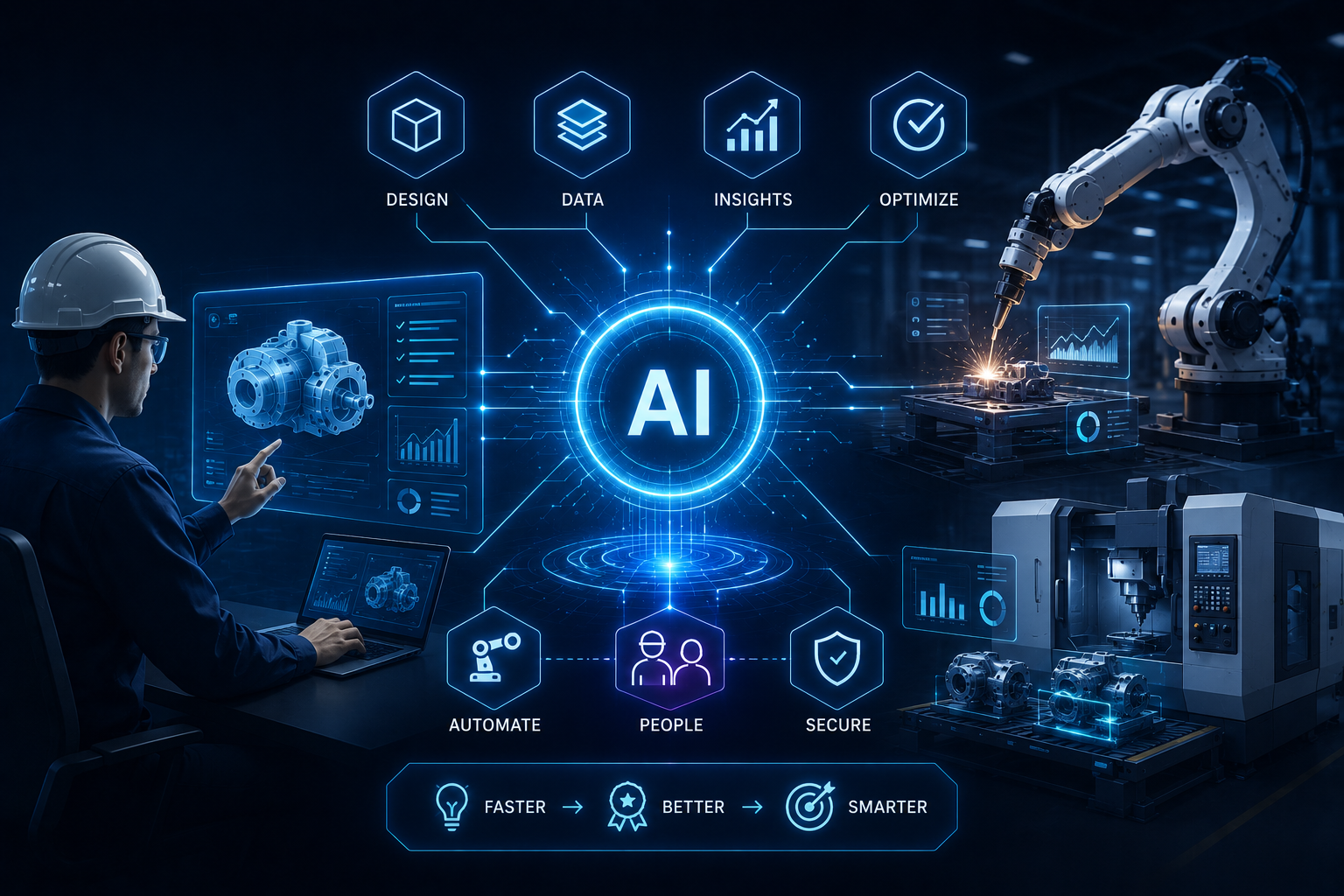
For leaders in manufacturing and product development, the challenge is clear: how can organizations take advantage of this transformation? According to PTC, the answer lies in a practical formula: Product data foundation + embedded AI = strategic advantage
The good news is that businesses are not starting from scratch. Many organizations have already been building their product data foundations over time. Now, AI serves as the tool that enables them to unlock greater value from that foundation.
Embedded AI refers to the integration of artificial intelligence directly into the software and systems that businesses use every day, rather than using AI as a separate external tool. This means AI operates within existing workflows, leveraging internal enterprise data to provide recommendations, support decision-making, or automate parts of tasks.
AI is only as effective as the data it uses. This means that a company’s product data foundation is not just important, it is essential.
A product data foundation includes all the data that defines a product throughout its lifecycle, such as requirements, 3D models, bills of materials (BOM), spare parts information, and more. This data is structured, controlled, secured, and traceable within enterprise software systems, including:
The foundation for these applications lies in core AI technologies, including agents, data, and models, built with a strong focus on enterprise-level security, reliability, and quality.
Over more than a decade of implementing AI solutions, NEAX has worked closely with customers and partners to understand what works and what doesn’t. With the rise of generative AI, several important lessons have emerged.
In conclusion, competitive advantage in the AI era does not come from simply having AI, but from having a strong data foundation that enables AI to perform effectively. Organizations that successfully combine product data foundations with embedded AI will gain a clear advantage in innovation speed, product quality, and decision-making capabilities.